
Uncategorized
Does Boiling Water Remove Chlorine and Chloramine?
Apr
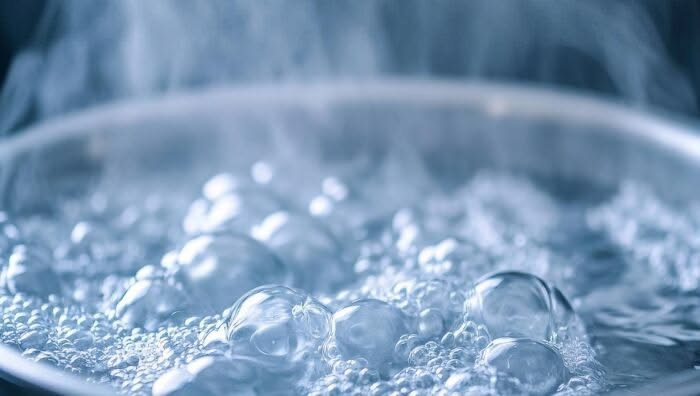
Boiling helps with chlorine. It does not remove chloramine. Free chlorine escapes from water as a gas, so heat and time let it go. Chloramine is made to stay in the water, and the US EPA says boiling does not take it out. Which of the two comes out of your tap decides whether the kettle is any use.
What boiling does to chlorine
Free chlorine does not hang about once water meets the air. The Australian Drinking Water Guidelines, published by the NHMRC, describe chlorine as not stable in water and list aeration and sunlight among the ways it is removed. TasWater puts it in kitchen terms: chill a jug of water in the fridge and the chlorine smell fades as the gas dissipates.
Heat speeds the same thing up. Icon Water, which supplies Canberra, says chlorine may be more noticeable when water is heated. That smell is chlorine leaving the water for the air, and a kettle at a rolling boil takes the same process further.
What boiling does to chloramine
Chloramine is chlorine bonded with ammonia, and utilities choose it because it lasts. Water Corporation says chloramines persist in the water supply system for a long period, and the NHMRC guidelines note that monochloramine persists for longer, which makes it useful in long pipe networks.
The kettle does not shift it. The US EPA’s answer takes one line: boiling water does not remove monochloramine. It adds that monochloramine can be more difficult to remove than chlorine.
Does leaving tap water to stand work?
For chlorine, yes, given time. Water Corporation suggests letting water stand in the sunlight in a covered container for two hours, or chilling it, to take away the chlorine taste. TasWater suggests the jug in the fridge. Both work the way boiling does, by letting chlorine leave as a gas.
For chloramine, no. The US EPA says allowing water to sit at room temperature does not remove monochloramine. A jug left out overnight gives up its chlorine and keeps its chloramine.

Which one comes out of your tap?
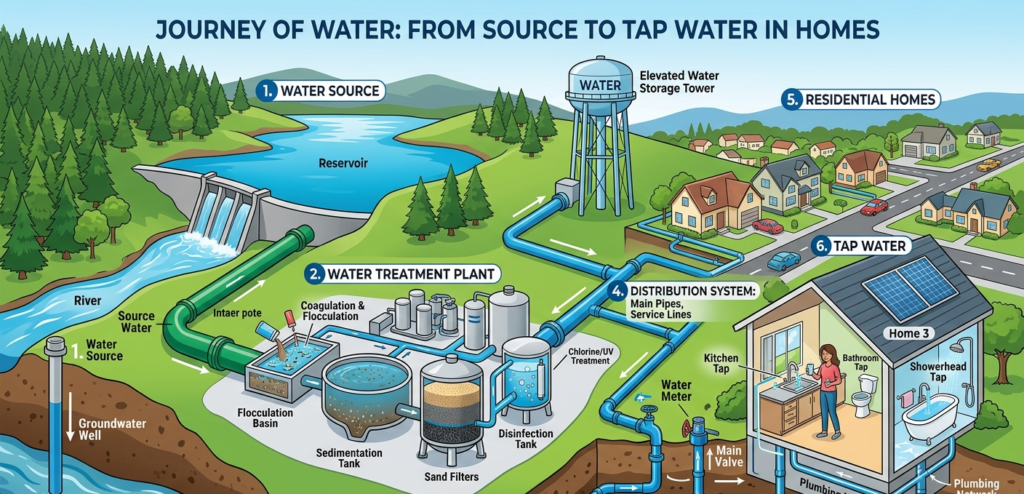
It depends on your supply, and sometimes on your suburb. Some Australian utilities disinfect with chlorine, some with chloramine, and some use each on different supplies. The answer for each city, with the utility named, is on chloramine and vitamin C.
If your water is chloraminated, the kettle and the fridge jug both leave it in.
Removing both at the shower head
Boiling only ever deals with what fits in the kettle. A shower runs far more water than that, hot, in a closed room.
Vitamin C works on both. It is a reducing agent, the kind of chemistry the NHMRC guidelines list for removing chlorine and monochloramine alike. It gives electrons to free chlorine and to chloramine and turns both into chloride, the ion already in table salt. The lemon juice Water Corporation suggests for the chlorine taste carries vitamin C too. There is more on the chemistry in inside a shower filter cartridge.
A Suhae shower filter brings that chemistry to the shower. Each Vita Refill holds 25,000mg of vitamin C, and KEWI certificate IW-230133 records 99.9% chlorine removal, with no chlorine detected at 6,000 litres.
Radiance is a filtered shower head with the cartridge sitting inside it. It has a universal fit for standard shower fittings and installs in about 2 minutes with no tools. Vita Refills come in ten scents at AUD $29.90, and one lasts two to three months depending on how much your household showers.
Keep the kettle for a cup of tea. In the shower, let a Suhae shower filter take out the chlorine and the chloramine.
