You turn on your tap expecting clean, safe water and that is exactly what you get. But have you ever noticed a slight chlorine smell, especially during a warm shower? Many people assume this means the water is not fully treated. In reality, the presence of chlorine is intentional and plays an important role in keeping water safe all the way to your home. Understanding why chlorine remains in tap water can help you make better choices for your daily routine, especially when it comes to your skin and hair.
The Hidden Journey of Tap Water
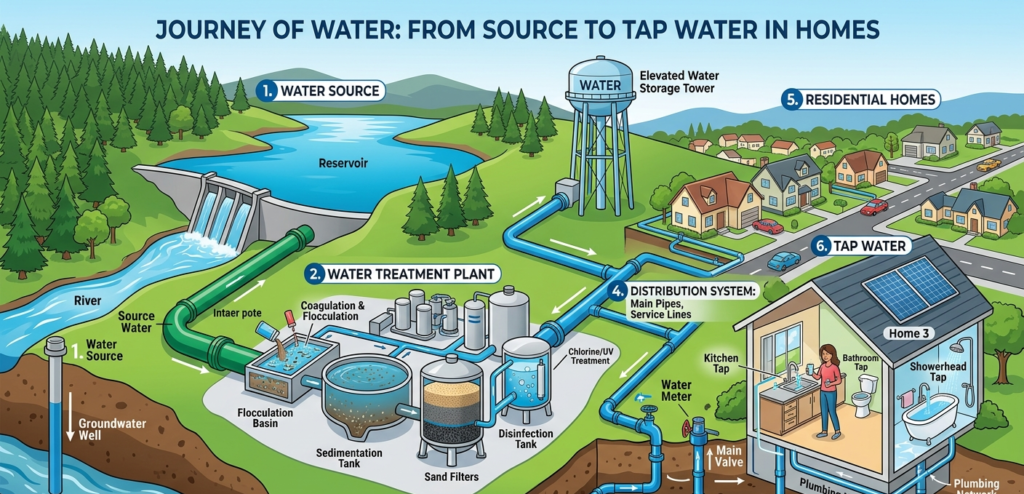
Before reaching your home, water travels through an extensive network of pipes, storage systems, and infrastructure. Even after undergoing purification, water is still exposed to potential contaminants along the way.
Without ongoing protection, bacteria and microorganisms could grow inside pipelines. This is why water treatment systems do not just clean water once. They ensure it stays clean throughout its journey.
In some Australian cities the residual is not free chlorine at all but chloramine, which does not behave the same way. More on that in chloramine and vitamin C.
Why Residual Chlorine Matters
Chlorine is widely used because it is highly effective at killing harmful microorganisms. It has been one of the most important advancements in public health, significantly reducing waterborne diseases.
Maintaining a small amount of residual chlorine ensures that water remains safe even after leaving treatment facilities. This balance is carefully controlled. Enough chlorine is added to prevent contamination, but not so much that it becomes unsafe for daily use.
For most tap water systems, chlorine levels are kept within a safe range that supports both hygiene and consumption.
How Chlorine Behaves in Your Shower
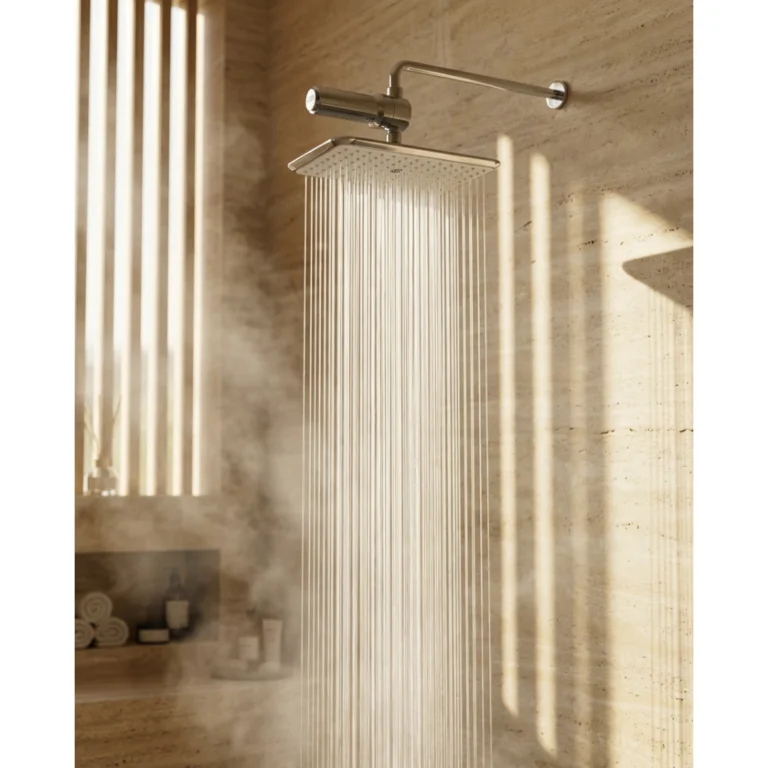
When water flows through a showerhead, it breaks into tiny droplets. This increases the surface area and allows chlorine to interact more easily with air.
Warm temperatures make chlorine more volatile, which is why hot showers often release that familiar pool like scent. During this process, your skin and hair come into direct contact with chlorinated water.
Chlorine is an oxidising agent, so repeated contact means repeated reaction with organic material. How much reaches you depends on your supply and your water temperature.
Simple Ways to Reduce Chlorine Exposure
While chlorine is essential for safety, some people prefer to minimise exposure during daily routines like showering.
Here are a few practical approaches: • Use lukewarm water instead of very hot water • Keep showers shorter when possible • Install a shower filtration system • Choose filtration methods designed to neutralise chlorine effectively
One of the most effective solutions is using Vitamin C filtration. This method works by chemically converting chlorine into harmless chloride, helping to create gentler water without affecting pressure.
A Smarter Way to Upgrade Your Shower Experience
SUHAE integrates this approach into its shower systems to improve everyday water quality in a subtle but meaningful way.
The SUHAE Radiance hand shower reduces impurities and neutralises chlorine before the water leaves the head.
Instead of changing your entire water system, a simple upgrade at the point of use can make daily showers feel softer, more comfortable, and more refreshing. It is not about removing the safety benefits of treated water, but about changing what is left in it by the time it reaches the shower head.
Bringing It All Together
Chlorine remains in tap water for a good reason. It protects your water from contamination all the way to your home. However, that same protection can influence your daily shower experience over time.
By understanding how chlorine works and exploring simple ways to reduce exposure, you can create a more comfortable and balanced routine. Small changes, like upgrading your shower setup, change what you rinse in every day.